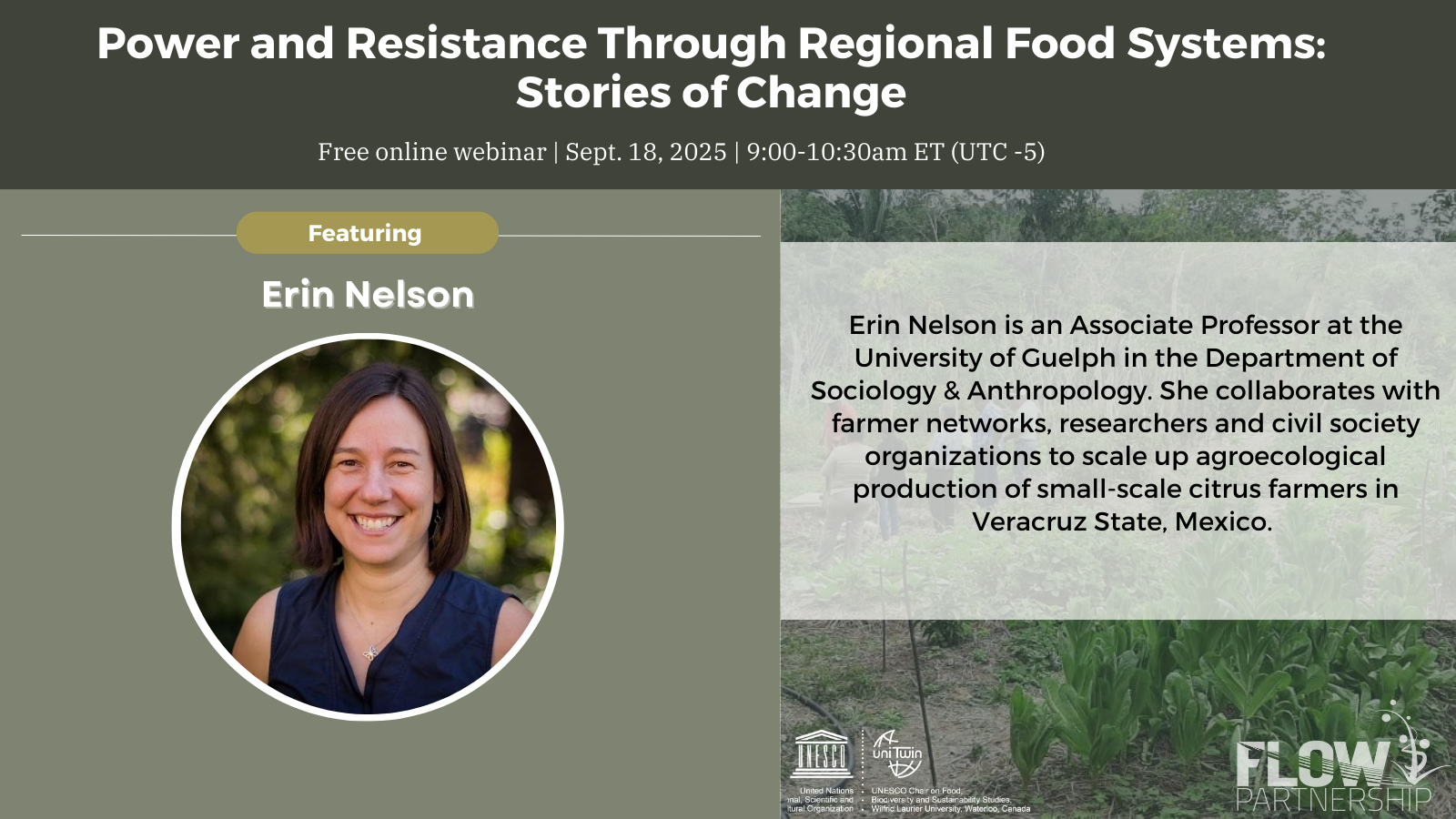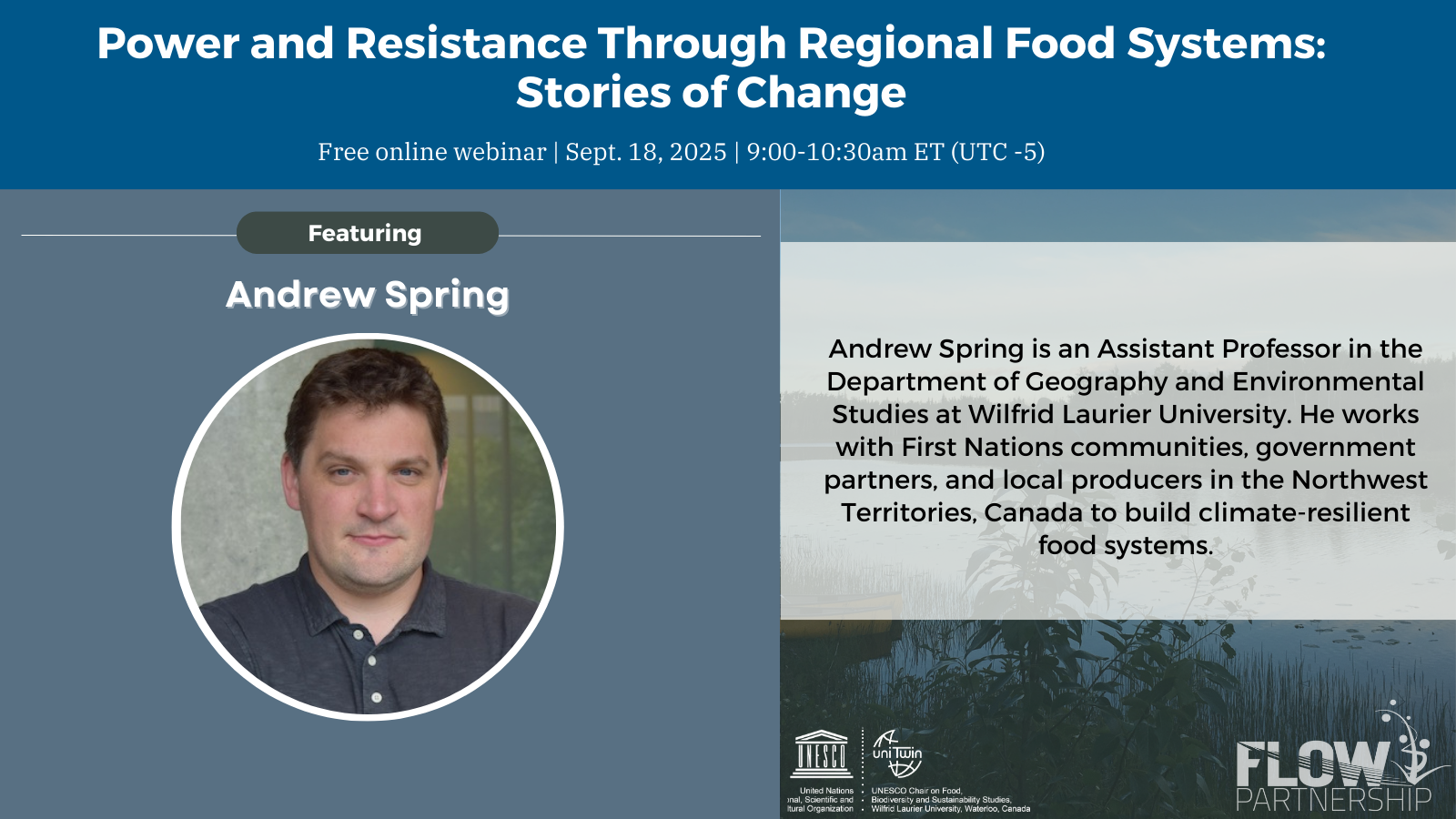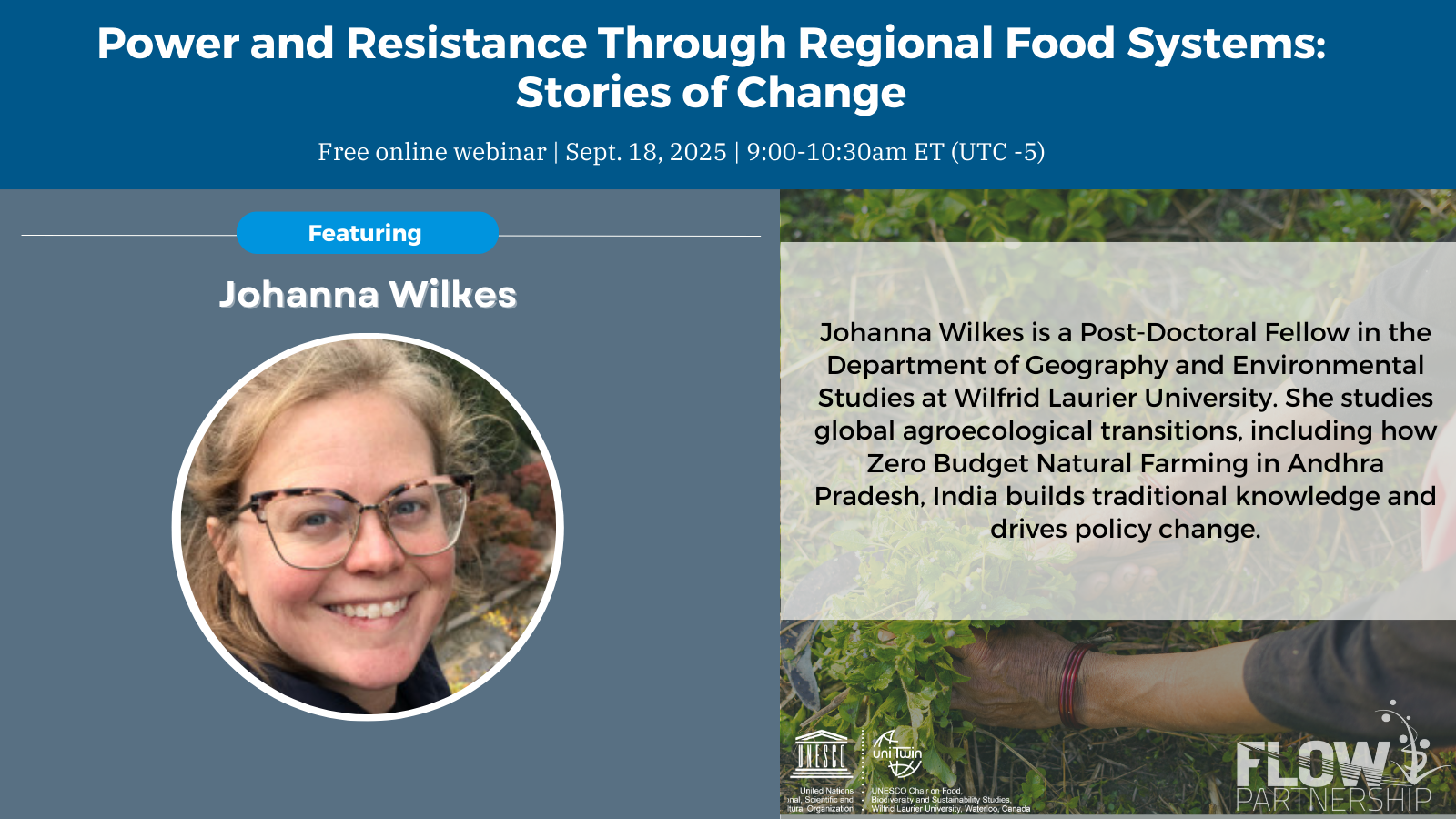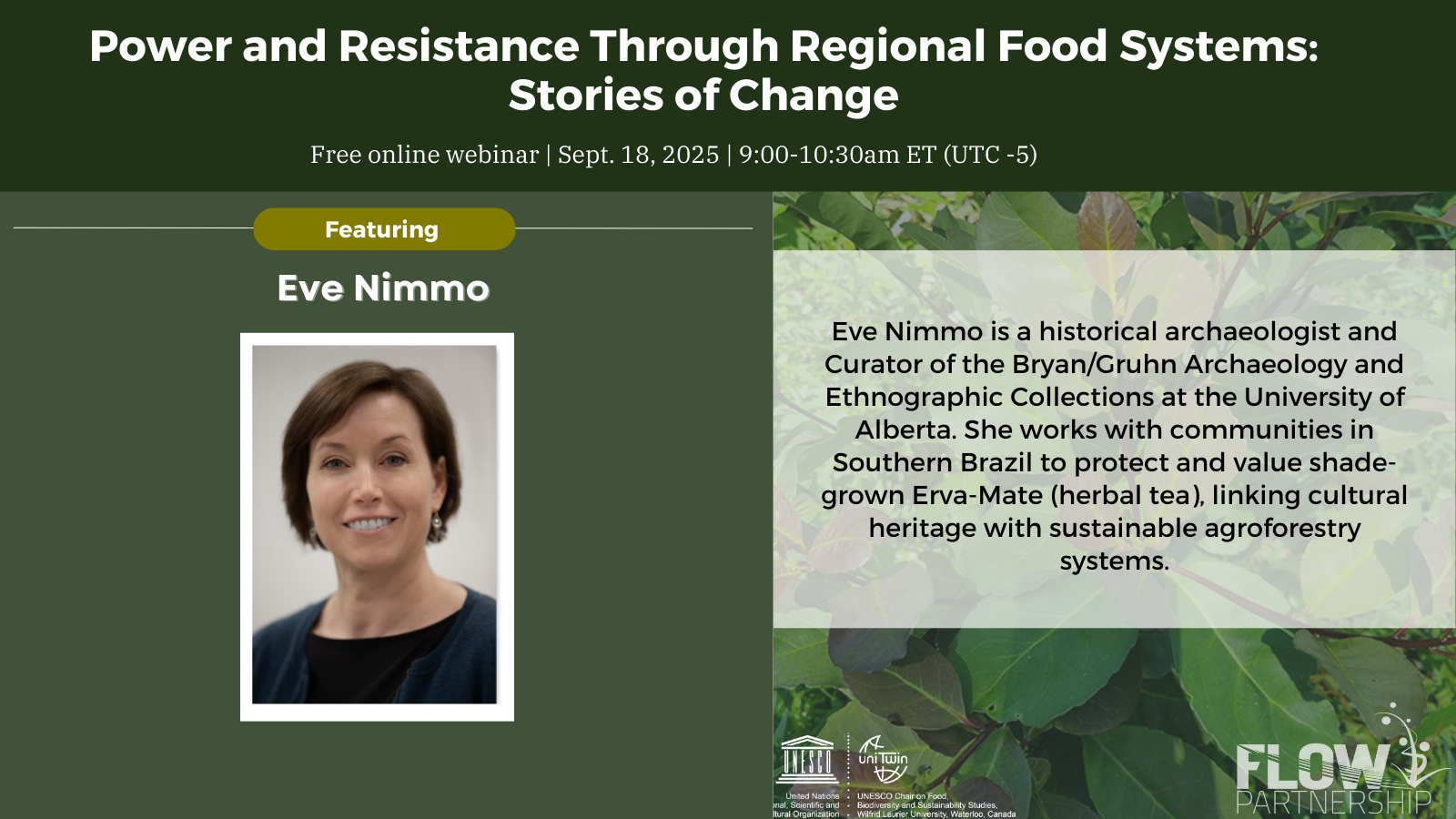
On September 18, 2025, the UNESCO Chair on Food, Biodiversity, and Sustainability Studies hosted a FLOW webinar focused on how the partnership regions manifest the key themes of power and resistance. Power and Resistance in Regional Food Systems: Stories of Change featured Erin Nelson, Andrew Spring, Johanna Wilkes, and Eve Nimmo, offering stories and inspiration from Veracruz State (Mexico), Northwest Territories (Canada), Andhra Pradesh (India), and Southern Brazil.
View the webinar recording on YouTube or below.
Hosted by the UNESCO Chair on Food, Biodiversity and Sustainability Studies, this webinar highlighted the FLOW Partnership’s work in advancing sustainable and transformative regional food systems. The discussion focused on how communities around the world are resisting industrial, chemical-intensive models of agriculture by promoting alternatives rooted in ecological practices and cultural knowledge.
Speakers shared examples from their regional contexts including:
- In Veracruz State, Mexico, collective action has resulted in supportive agroecological policies leading to a ban on glyphosate and the insecticide, Benevia.
- In the Northwest Territories, Canada, Indigenous communities are adapting to challenges posed by climate change by building capacity for food sovereignty and asserting their traditional authority and governance over the land.
- In Andhra Pradesh, India, a state run farmer training program is enabling farmers to shift toward natural farming that builds agroecological knowledge.
- In Southern Brazil, the recognition of shade-grown erva mate as a Globally Important Agricultural Heritage System (GIAHS), affirming and protecting traditional practices.
Together, these stories show how community-led action, traditional knowledge, and agroecology offer powerful strategies for challenging dominant food systems and shaping pathways toward just and resilient alternatives.